
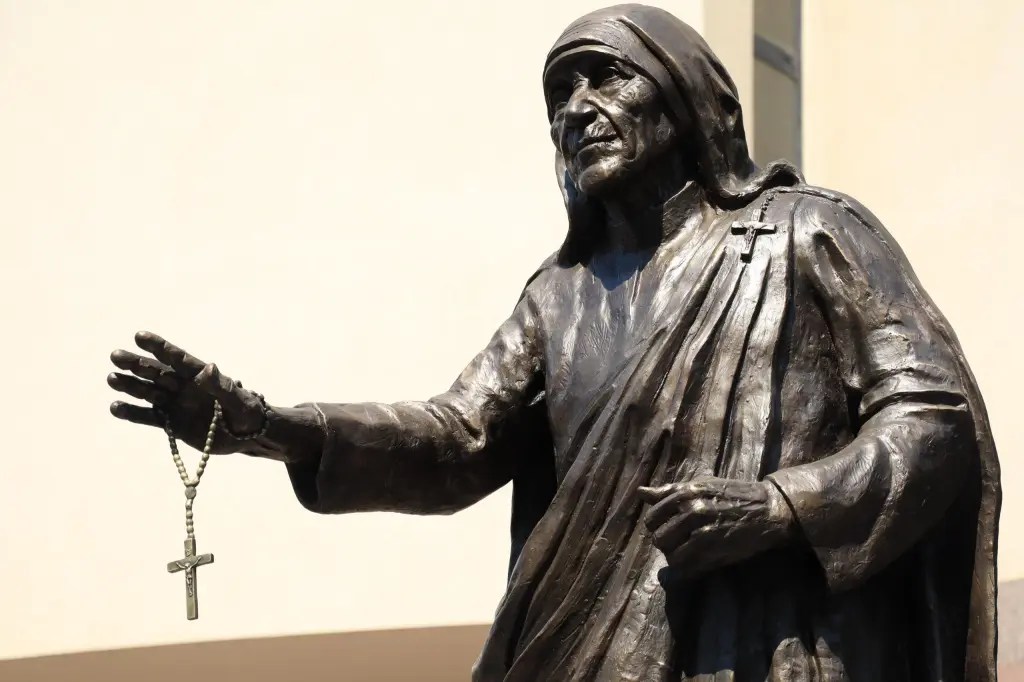
Në sheshin përpara tërheqin vëmendjen shtatoret, nën hijen e ullinjve, simbole të paqes. Në të djathtë, Nëna Terezë (2026), vepër e skulptorit shqiptar Henri Mimani, e bekuar në prani të Nuncit Apostolik, Imzot Miroslav Adamczyk.
ITA
All’esterno sono presente due statue, all’ombra di due ulivi simbolo di pace, sulla destra Madre Teresa (2026) opera dello scultore albanese Henri Mimani. Benedetta alla presenza del nunzio apostolico Mons. Miroslav Adamczyk.
ENG
Outside there are two statues, in the shade of two olive trees, symbols of peace. On the right is Mother Teresa (2026), a work by the Albanian sculptor Henri Mimani, blessed in the presence of the Apostolic Nuncio, Msgr. Miroslav Adamczyk.
Koncepti artistik i autorit e skulpturës së Shën Nënë Terezës
Koncepti i veprës
Skulptura e Shën Nënë Terezës është konceptuar si një ndërthurje mes dimensionit shpirtëror të shenjtërisë dhe dimensionit njerëzor të përulësisë, dhembshurisë dhe shërbimit. Synimi nuk është vetëm paraqitja e figurës së saj, por krijimi i një pranie që përcjell thelbin e misionit të saj: dashurinë e pakushtëzuar ndaj njeriut.
Përmasa dhe marrëdhënia mes hyjnores dhe njerëzores
Lartësia prej dy metrash është një zgjedhje e vetëdijshme artistike. Ajo i jep figurës një karakter monumental, të denjë për hapësirën sakrale të Katedrales, duke ruajtur njëkohësisht afërsinë me përmasën njerëzore. Kjo shkallë synon të shprehë dy dimensione të pandashme të Nënë Terezës: shenjtërinë, që e ngre figurën në një plan shpirtëror, dhe njerëzoren, që e mban atë pranë çdo individi. Monumentaliteti nuk synon të krijojë distancë apo madhështi imponuese, por të bëjë të ndjeshme forcën shpirtërore që buron nga përulësia dhe shërbimi.
Drejtimi i dorës në shenjë bekimi
Drejtimi i pëllëmbës së dorës së djathtë në shenjë bekimi është një element i rëndësishëm i gjuhës shprehëse të veprës. Orientimi i saj është menduar që gjesti të mos mbetet thjesht një shenjë ikonografike, por të krijojë një marrëdhënie të drejtpërdrejtë me besimtarin. Dora përcjell bekimin, por njëkohësisht shpreh hapjen, përkujdesjen dhe gatishmërinë për t’iu afruar tjetrit. Në këtë mënyrë, gjesti lidh dimensionin hyjnor me përvojën njerëzore dhe e shndërron besimin në një akt dashurie, mbrojtjeje dhe shërbimi.
Dora e ngritur dhe simbolika e Rruzarës
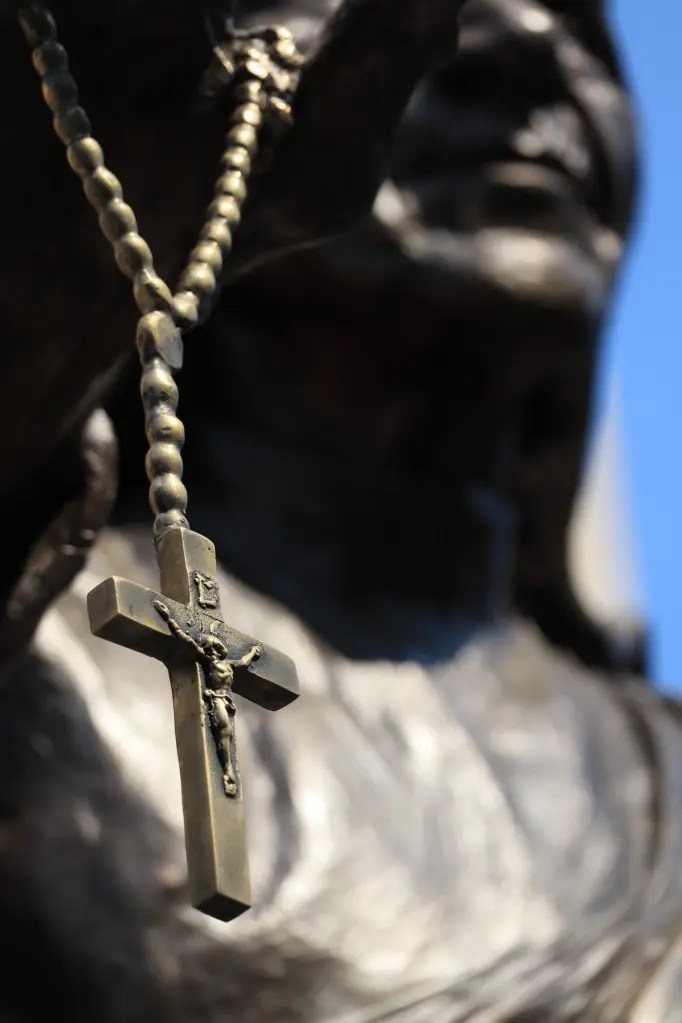
Dora e ngritur, e shoqëruar nga Rruzarja, përbën një nga elementet më domethënëse të kompozimit. Drejtimi i pëllëmbës në shenjë bekimi dhe prania e rozarios ndërtojnë një marrëdhënie simbolike mes lutjes, besimit dhe dashurisë ndaj njeriut. Rruzarja nuk është konceptuar thjesht si një atribut fetar, por si shenjë e jetës së brendshme shpirtërore të Nënë Terezës, e përkushtimit të saj të vazhdueshëm ndaj Zotit dhe e forcës që buron nga lutja.
Në këtë gjest bashkohen dy dimensione të misionit të saj: dora shpreh bekimin dhe hapjen ndaj njeriut, ndërsa rruzarja dëshmon lidhjen shpirtërore që ushqen këtë përkushtim. Kështu, besimi nuk paraqitet si një përjetim i izoluar, por si burimi i një dashurie që shndërrohet në veprim, kujdes dhe shërbim ndaj më të varfërve e më të vuajturve.
Vendosja e Rruzarës në dorën e ngritur krijon gjithashtu një bosht të qartë shprehës brenda figurës: një gjest që ngrihet drejt dimensionit hyjnor, por që njëkohësisht i drejtohet njeriut. Në këtë mënyrë, kompozimi synon të përcjellë idenë se lutja dhe shërbimi janë dy shprehje të së njëjtës dashuri.
Bazamenti dhe ideja e përkatësisë
Dimensionet e bazamentit janë përcaktuar me synimin që figura të mos vendoset mbi një piedestal të lartë e të paarritshëm, por të mbetet në një marrëdhënie të afërt me njerëzit. Lartësia dhe përmasat e tij krijojnë mundësinë që besimtarët t’i afrohen skulpturës, ta prekin dhe ta përjetojnë atë jo vetëm përmes shikimit, por edhe përmes kontaktit fizik.
Kjo zgjedhje mbart një kuptim të veçantë simbolik: Nënë Tereza nuk i përket vetëm historisë, institucionit fetar apo përfytyrimit të shenjtërisë; ajo i përket njerëzve. Afrueshmëria fizike e figurës shpreh afërsinë shpirtërore me të gjithë ata që kërkojnë ngushëllim, shpresë dhe përkujdesje. Bazamenti, për këtë arsye, nuk synon ta ndajë figurën nga njerëzit, por të krijojë kushtet që ajo të mbetet e prekshme dhe e afërt me ta.
Draperia si shprehje e karakterit
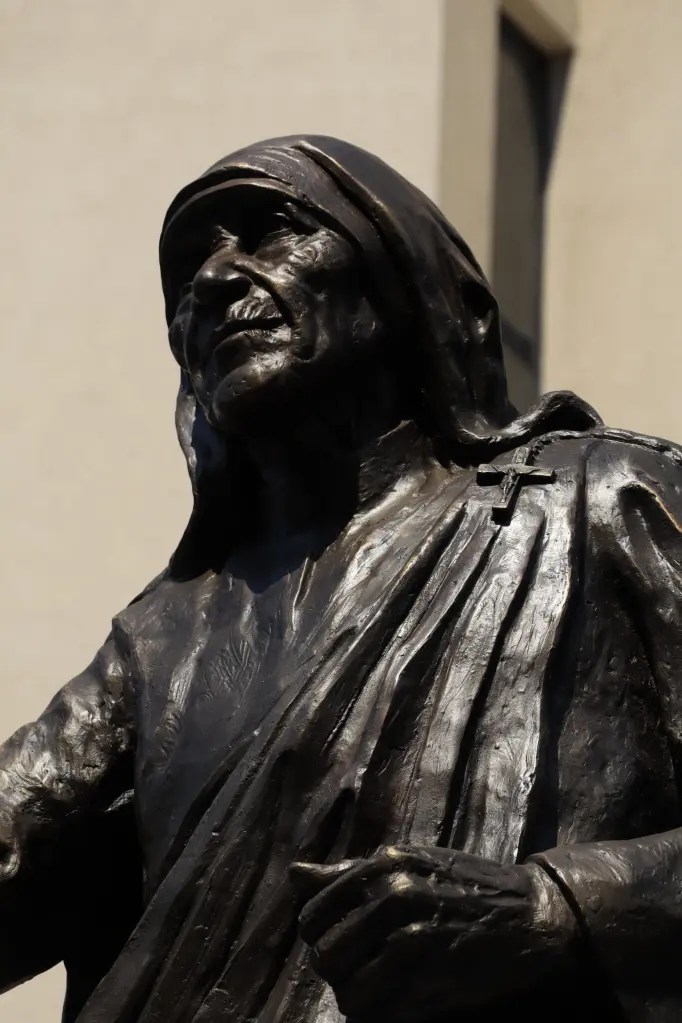
Trajtimi i draperisë synon të ruajë thjeshtësinë dhe identitetin e veshjes karakteristike të Nënë Terezës, duke e shndërruar atë në një element aktiv të kompozimit. Palat ndërtojnë ritmin plastik të figurës, organizojnë marrëdhënien mes vëllimeve dhe krijojnë një lojë të kontrolluar drite dhe hijeje. Ato nuk synojnë efektin dekorativ, por shprehjen e përulësisë, qëndrueshmërisë dhe qetësisë së brendshme. Përmes kësaj gjuhe, thjeshtësia e veshjes fiton forcë monumentale pa humbur karakterin e saj njerëzor.
Marrëdhënia me hapësirën e Katedrales
E konceptuar për hapësirën e Katedrales, skulptura synon të bashkëjetojë me arkitekturën sakrale pa konkurruar me të. Qartësia e siluetës, përmbajtja e gjesteve dhe trajtimi i vëllimeve synojnë të krijojnë një prani dinjitoze, e cila komunikon si me hapësirën fetare, ashtu edhe me besimtarin.
Përfundim
Koncepti i veprës mbështetet në idenë se shenjtëria nuk duhet të krijojë largësi nga njeriu, por ta afrojë atë drejt dashurisë, përulësisë dhe shërbimit. Përmasa e figurës, drejtimi i dorës në shenjë bekimi, prania e rozarios, trajtimi i draperisë dhe dimensionet e bazamentit janë pjesë të një mendimi të vetëm artistik: të krijojnë një figurë njëkohësisht monumentale dhe të afërt, shpirtërore dhe njerëzore.
Nënë Tereza paraqitet si një prani që nuk qëndron mbi njerëzit, por mes tyre. Ajo është figurë e shenjtë, por edhe e tyre: e afërt, e prekshme dhe gjithmonë e kthyer nga njeriu.
ITA
Concetto artistico dell’autore
Concetto dell’opera
La scultura di Santa Madre Teresa è stata concepita come un intreccio tra la dimensione spirituale della santità e la dimensione umana dell’umiltà, della compassione e del servizio. L’intento non è soltanto rappresentare la sua figura, ma creare una presenza che trasmetta l’essenza della sua missione: l’amore incondizionato verso l’uomo.
Dimensione e rapporto tra divino e umano
L’altezza di due metri è una scelta artistica consapevole. Conferisce alla figura un carattere monumentale, degno dello spazio sacro della Cattedrale, mantenendo allo stesso tempo la vicinanza alla dimensione umana. Questa scala intende esprimere due dimensioni inseparabili di Madre Teresa: la santità, che eleva la figura su un piano spirituale, e l’umanità, che la mantiene vicina a ogni individuo. La monumentalità non vuole creare distanza né una grandezza imponente, ma rendere percepibile la forza spirituale che nasce dall’umiltà e dal servizio.
Orientamento della mano in segno di benedizione
L’orientamento del palmo della mano destra in segno di benedizione è un elemento importante del linguaggio espressivo dell’opera. È stato pensato affinché il gesto non rimanga un semplice segno iconografico, ma crei una relazione diretta con il fedele. La mano trasmette la benedizione, ma al tempo stesso esprime apertura, premura e disponibilità ad avvicinarsi all’altro. In questo modo il gesto collega la dimensione divina all’esperienza umana e trasforma la fede in un atto di amore, protezione e servizio.
La mano alzata e il simbolismo del rosario
La mano alzata, accompagnata dal rosario, costituisce uno degli elementi più significativi della composizione. L’orientamento del palmo in segno di benedizione e la presenza del rosario costruiscono una relazione simbolica tra preghiera, fede e amore verso l’uomo. Il rosario non è concepito come un semplice attributo religioso, ma come segno della vita interiore e spirituale di Madre Teresa, della sua costante dedizione a Dio e della forza che nasce dalla preghiera. In questo gesto si uniscono due dimensioni della sua missione: la mano esprime la benedizione e l’apertura verso l’uomo, mentre il rosario testimonia il legame spirituale che alimenta questa dedizione. Così la fede non appare come un’esperienza isolata, ma come la sorgente di un amore che si fa azione, cura e servizio verso i più poveri e i più sofferenti.
La collocazione del rosario nella mano alzata crea inoltre un chiaro asse espressivo all’interno della figura: un gesto che si eleva verso la dimensione divina, ma che al tempo stesso si rivolge all’uomo. In questo modo la composizione intende trasmettere l’idea che la preghiera e il servizio siano due espressioni dello stesso amore.
Il basamento e l’idea di appartenenza
Le dimensioni del basamento sono state definite con l’intento che la figura non sia posta su un piedistallo alto e irraggiungibile, ma rimanga in un rapporto di vicinanza con le persone. La sua altezza e le sue proporzioni offrono ai fedeli la possibilità di avvicinarsi alla scultura, di toccarla e di viverla non solo attraverso lo sguardo, ma anche attraverso il contatto fisico.
Questa scelta porta con sé un significato simbolico particolare: Madre Teresa non appartiene soltanto alla storia, all’istituzione religiosa o all’immaginario della santità; appartiene alle persone. L’accessibilità fisica della figura esprime la vicinanza spirituale a tutti coloro che cercano consolazione, speranza e premura. Il basamento, per questo motivo, non intende separare la figura dalle persone, ma creare le condizioni perché essa rimanga tangibile e vicina a loro.
Il panneggio come espressione del carattere
Il trattamento del panneggio intende conservare la semplicità e l’identità dell’abito caratteristico di Madre Teresa, trasformandolo in un elemento attivo della composizione. Le pieghe costruiscono il ritmo plastico della figura, organizzano il rapporto tra i volumi e creano un gioco controllato di luci e ombre. Esse non mirano all’effetto decorativo, ma all’espressione di umiltà, fermezza e quiete interiore. Attraverso questo linguaggio, la semplicità dell’abito acquista forza monumentale senza perdere il suo carattere umano.
Il rapporto con lo spazio della Cattedrale
Concepita per lo spazio della Cattedrale, la scultura intende convivere con l’architettura sacra senza competere con essa. La chiarezza della silhouette, la sobrietà dei gesti e il trattamento dei volumi mirano a creare una presenza dignitosa, che comunica sia con lo spazio religioso sia con il fedele.
Conclusione
Il concetto dell’opera si fonda sull’idea che la santità non debba creare distanza dall’uomo, ma avvicinarlo all’amore, all’umiltà e al servizio. La dimensione della figura, l’orientamento della mano in segno di benedizione, la presenza del rosario, il trattamento del panneggio e le dimensioni del basamento fanno parte di un unico pensiero artistico: creare una figura al tempo stesso monumentale e vicina, spirituale e umana. Madre Teresa si presenta come una presenza che non sta al di sopra delle persone, ma in mezzo a loro. È una figura santa, ma anche loro: vicina, tangibile e sempre rivolta all’uomo.
@henrimimani
ENG
Artistic concept of the author
Concept of the work
The sculpture of Saint Mother Teresa was conceived as an interweaving of the spiritual dimension of holiness and the human dimension of humility, compassion and service. The aim is not merely to depict her figure, but to create a presence that conveys the essence of her mission: unconditional love for the human person.
Scale and the relationship between the divine and the human
The height of two meters is a deliberate artistic choice. It gives the figure a monumental character, worthy of the sacred space of the Cathedral, while preserving closeness to the human scale. This scale seeks to express two inseparable dimensions of Mother Teresa: holiness, which raises the figure to a spiritual plane, and humanity, which keeps her close to every individual. The monumentality is not meant to create distance or an imposing grandeur, but to make perceptible the spiritual strength that springs from humility and service.
Direction of the hand in blessing
The orientation of the palm of the right hand in blessing is an important element of the work’s expressive language. It was conceived so that the gesture does not remain a mere iconographic sign, but creates a direct relationship with the faithful. The hand conveys the blessing, but at the same time expresses openness, care and readiness to approach the other. In this way the gesture links the divine dimension with human experience and transforms faith into an act of love, protection and service.
The raised hand and the symbolism of the rosary
The raised hand, accompanied by the rosary, is one of the most meaningful elements of the composition. The orientation of the palm in blessing and the presence of the rosary build a symbolic relationship between prayer, faith and love for the human person. The rosary is not conceived as a mere religious attribute, but as a sign of Mother Teresa’s inner spiritual life, of her constant devotion to God and of the strength that springs from prayer. In this gesture two dimensions of her mission are united: the hand expresses blessing and openness toward people, while the rosary bears witness to the spiritual bond that nourishes this devotion. Thus faith is not presented as an isolated experience, but as the source of a love that becomes action, care and service toward the poorest and most suffering.
Placing the rosary in the raised hand also creates a clear expressive axis within the figure: a gesture that rises toward the divine dimension, yet at the same time turns toward the human person. In this way the composition seeks to convey the idea that prayer and service are two expressions of the same love.
The base and the idea of belonging
The dimensions of the base were determined with the intention that the figure should not be placed on a high, unreachable pedestal, but should remain in a close relationship with people. Its height and proportions allow the faithful to approach the sculpture, touch it and experience it not only through sight, but also through physical contact.
This choice carries a particular symbolic meaning: Mother Teresa does not belong only to history, to the religious institution or to the imagery of holiness; she belongs to the people. The physical accessibility of the figure expresses spiritual closeness to all who seek comfort, hope and care. The base, for this reason, is not meant to separate the figure from people, but to create the conditions for her to remain tangible and close to them.
Drapery as an expression of character
The treatment of the drapery aims to preserve the simplicity and identity of Mother Teresa’s characteristic habit, turning it into an active element of the composition. The folds build the plastic rhythm of the figure, organize the relationship between volumes and create a controlled play of light and shadow. They do not aim at decorative effect, but at the expression of humility, steadfastness and inner calm. Through this language, the simplicity of the garment acquires monumental strength without losing its human character.
Relationship with the space of the Cathedral
Conceived for the space of the Cathedral, the sculpture aims to coexist with the sacred architecture without competing with it. The clarity of the silhouette, the restraint of the gestures and the treatment of the volumes aim to create a dignified presence that communicates both with the religious space and with the faithful.
Conclusion
The concept of the work rests on the idea that holiness should not create distance from the human person, but draw him closer to love, humility and service. The scale of the figure, the direction of the hand in blessing, the presence of the rosary, the treatment of the drapery and the dimensions of the base are all part of a single artistic thought: to create a figure that is at once monumental and close, spiritual and human. Mother Teresa appears as a presence that does not stand above people, but among them. She is a holy figure, yet also theirs: close, tangible and always turned toward the human person.
@henrimimani

